Grandparental Controls
Grandparental Controls is the first full game released with Lili's Game Engine — published on itch.io.
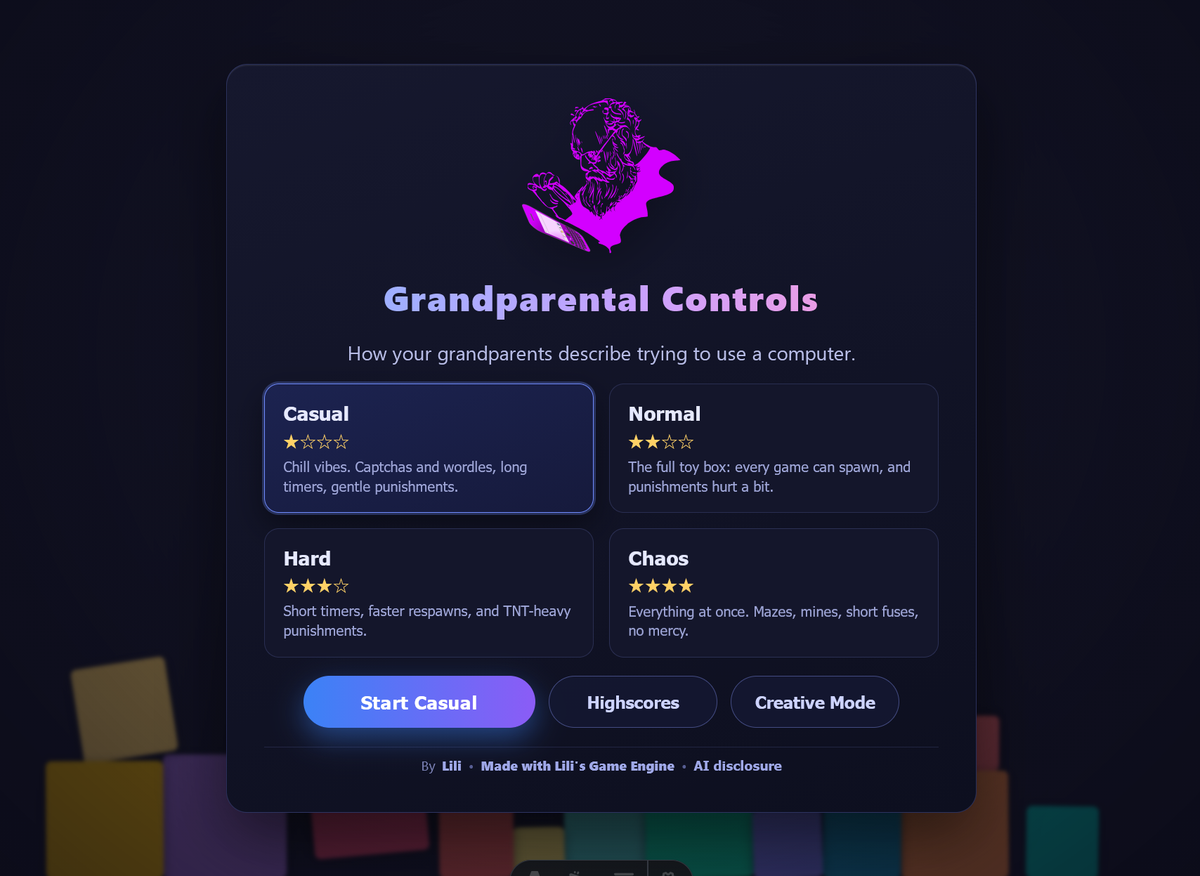
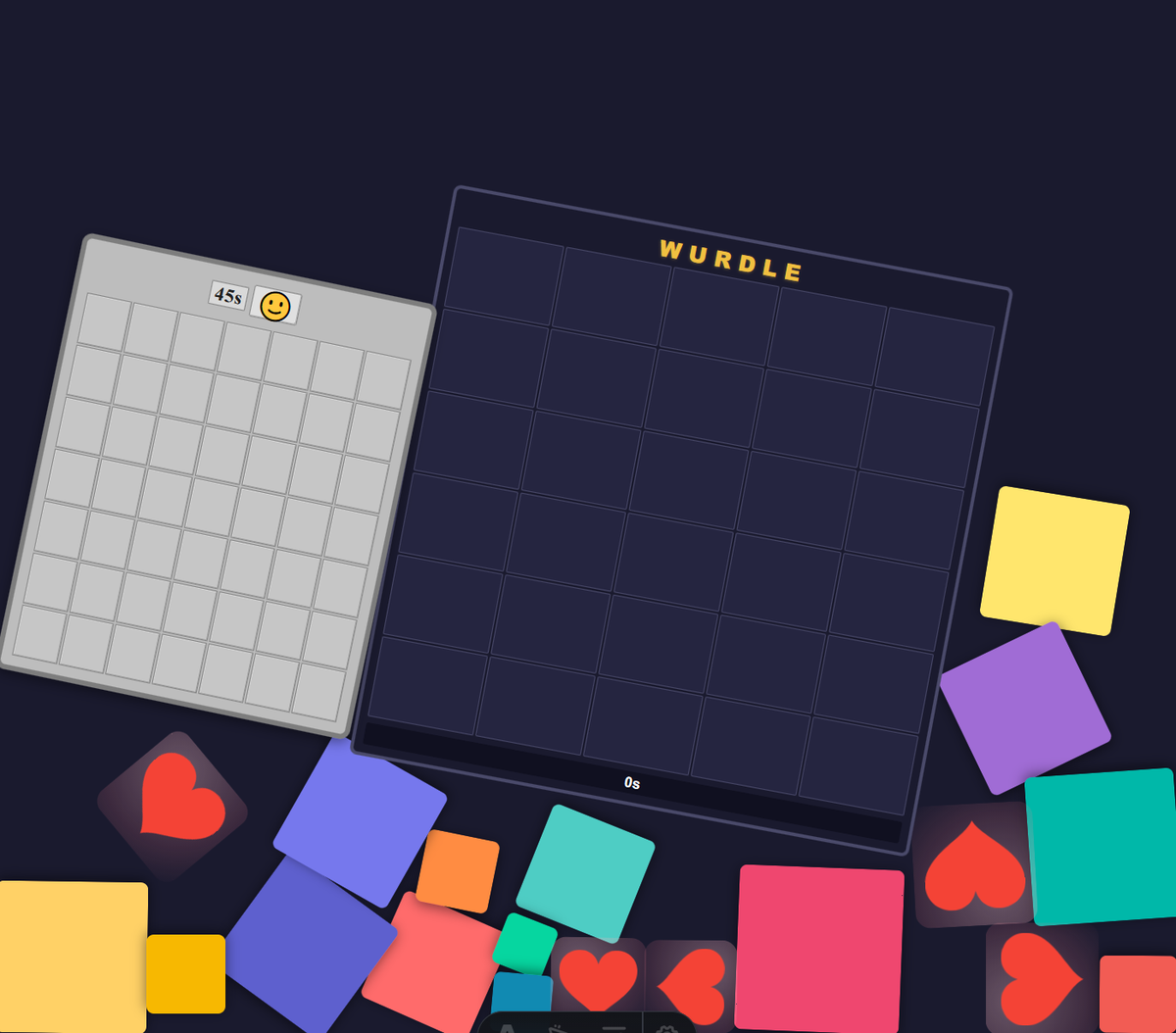
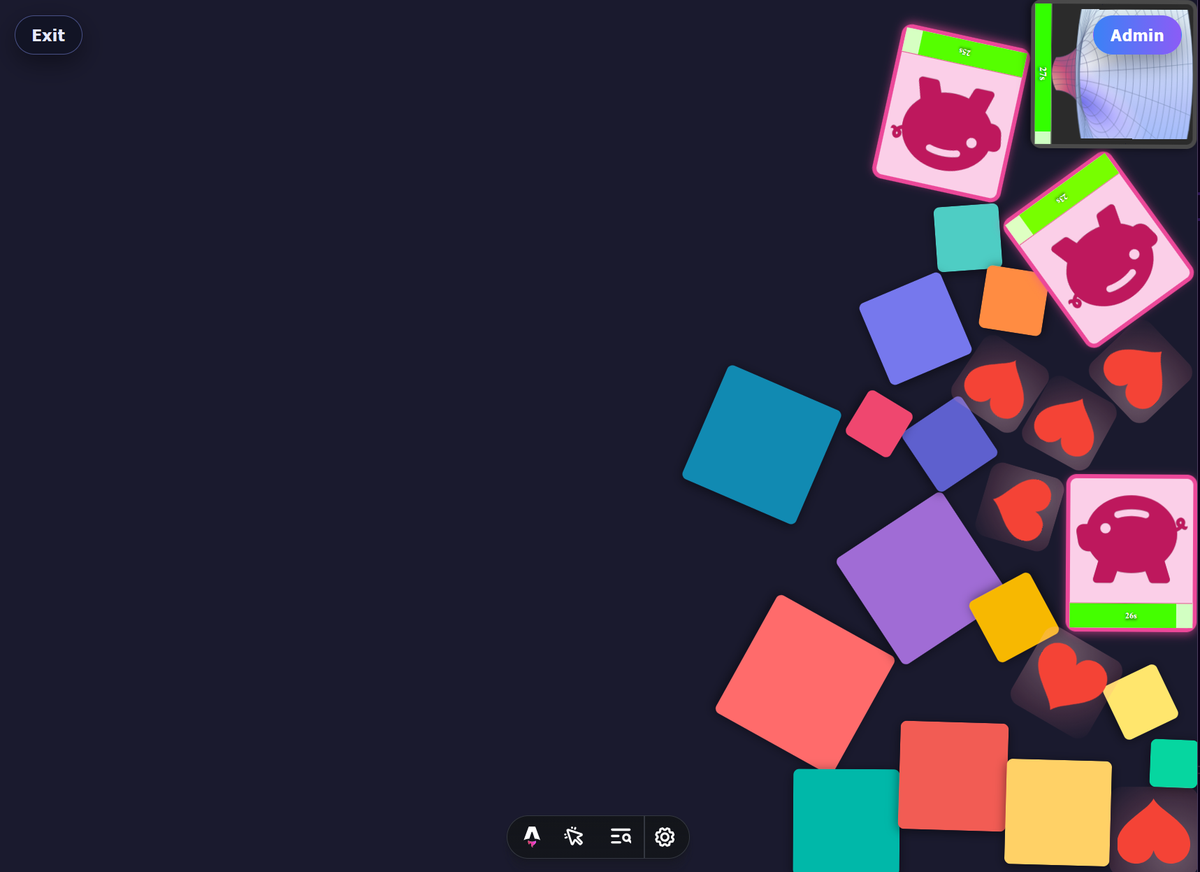
How your grandparents describe trying to use a computer: A chaotic physics game that got completely out of hand — but don't hit your life alert just yet.
You're babysitting a screen full of troublemakers: captchas, wordles, minesweeper boards, tic-tac-toe, and mazes with their own tiny physics simulations running inside them. Solve them before the timer runs out and you'll earn rewards. Fail, and the game throws TNT, homing missiles, and gravity-flipping chaos at your precious little hearts. Lose all your hearts and it's game over — but the high score board remembers everything.
- 5+ minigames, each with its own timer, sound effects, and win/lose consequences
- Physics everywhere: drag, stack, knock over, and watch everything tumble
- Rewards like hearts, shields, coins, piggy banks, and more
- Punishments like TNT, gravity modifiers, and heat-seeking missiles
- Multiple difficulty levels, from a chill sandbox to full chaos
- Creative mode with an admin console so you can spawn anything you want
- High scores for every difficulty — how long can you survive?
It's silly, it's stressful, it's satisfying. Welcome to why your grandpa can't read his email.
Play on itch.io →Mission Statement
Technical Explanation
The core idea is simple: entities are observable objects, and systems are plugins. An entity holds its own data, behavior, and events — a position, a sprite, a collision handler, a Solid component — and plugins subscribe to the parts they care about. Physics doesn’t know about rendering. Rendering doesn’t know about physics. Swapping Pixi for p5, or adding Matter, means changing the plugin list with minimal modifications.
State management is handled using my own universal state management library Jabr, which has no ecosystem lock-in — unlike most state libraries, which tend to be tied to a rendering framework like React or SolidJS. That makes it a natural fit for fusing the domains of web development and game development.
The design leans functional rather than object-oriented. Composition is declarative, systems are external functions over shared state, and capabilities are added by declaration rather than inheritance. The entity model itself is closer to a scene graph than to ECS — entities are real objects with identity and lifecycle — but the way logic composes borrows from ECS: systems are external, and every part of the engine was built for separation of concerns and interchangeability.
The same core runs many demos on this site — a platformer with Tiled maps, Matter physics, and a Solid UI, and a two-player Pong game rendered with p5, and many other demos. The renderer, the physics engine, and the game logic are all plugins and entities. None of them import each other.
